Video on large screens at concerts and shows – how it improves the viewer experience
How video on large screens improves the viewer experience at concerts and shows: visibility, emotions, IMAG signal, screen placement and delay.
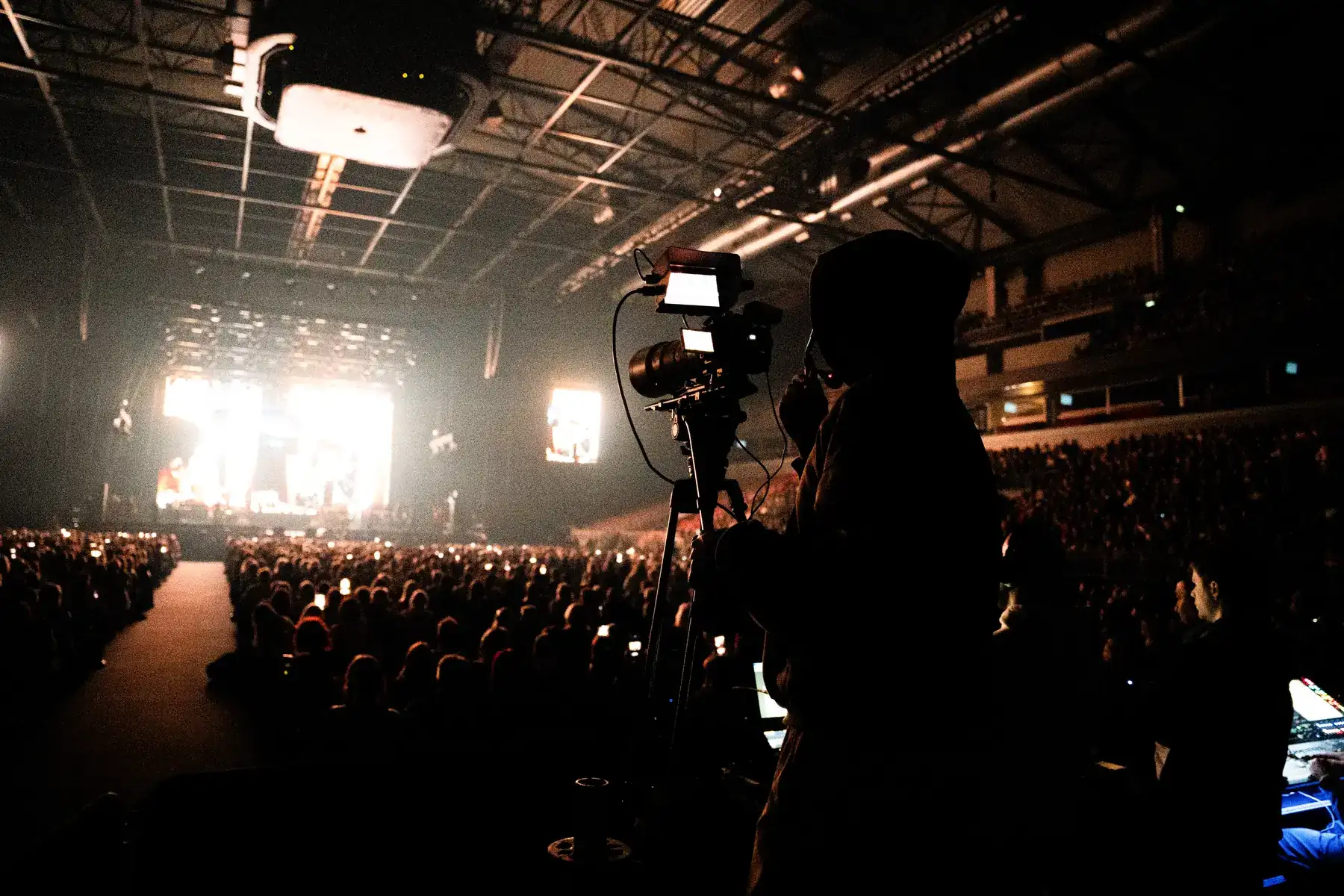
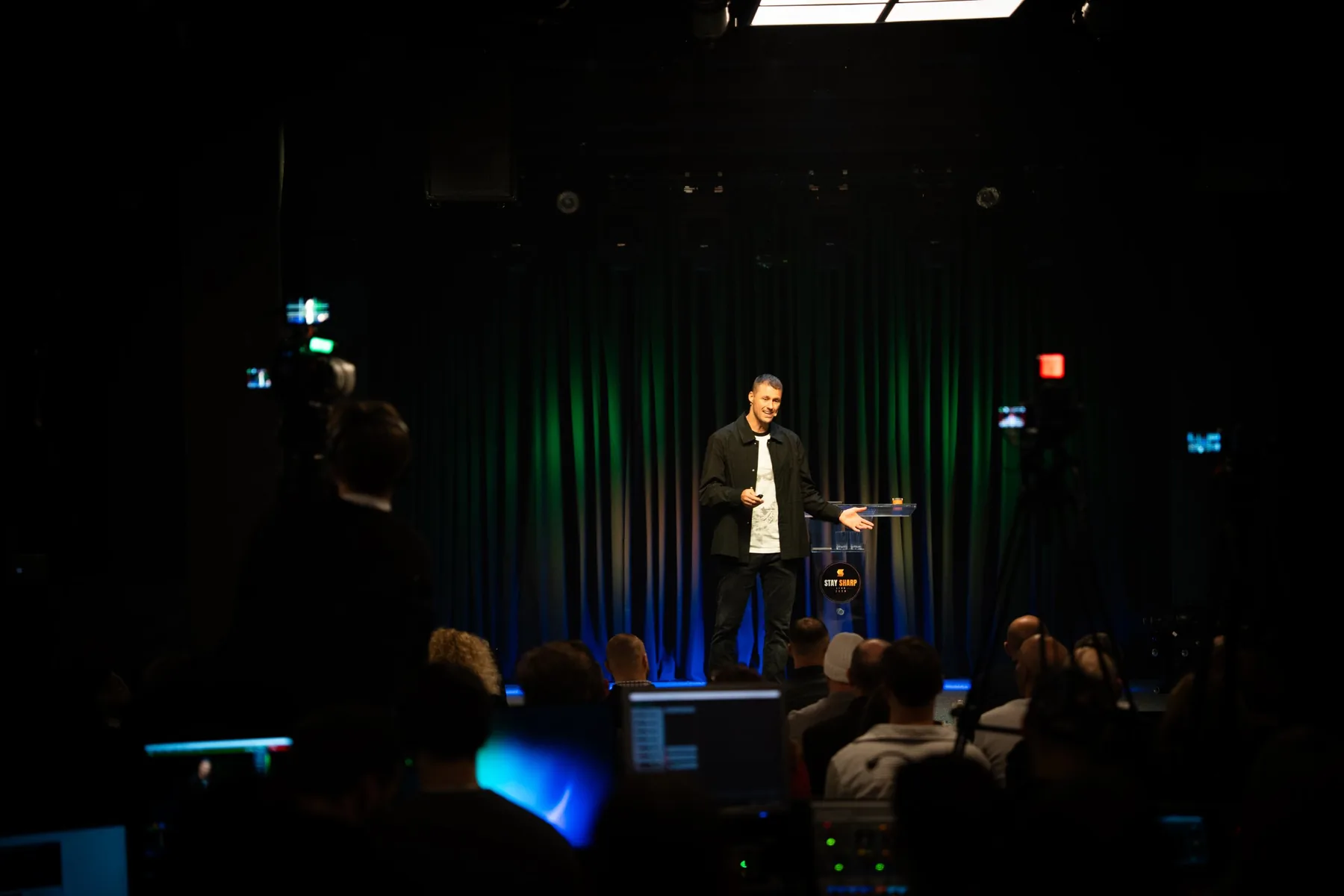
Usually, when we attend a show or concert, we want not only to hear our favourite artists, but also to see what's happening on stage. However, the biggest problem, especially at larger events, is that not all attendees have the opportunity to be close to the stage. That's why it's sometimes difficult to make out the artists' faces, movements and other important details.
That's why many concerts and shows use large screens that display what's happening on stage in real time.
This type of solution significantly improves the viewer experience, providing better visibility from different locations in the hall or event area. The artists can also be more confident that more viewers can fully enjoy the show.
But how exactly does video on large screens improve the viewer experience, and what should organisers and production teams consider when planning such a solution?
1. Better visibility for viewers who are far from the stage
One of the main reasons why large screens should be used at events, especially those with a large number of attendees, is to improve visibility.
At large concerts, viewers who are further away from the stage sometimes can't clearly see the artists' facial expressions, instruments or other small details.
Therefore, using large screens makes it possible to show the artists' close-ups and the most important performance moments to the viewers.
This method is especially useful at festivals, large concert halls and outdoor events, where viewers can be at different distances from the stage.
2. Large screens help create a more emotional experience
The atmosphere of concerts is usually created not only by the music, but also by the emotions and interaction of the artists with the audience.
For example, if the viewer is far from the stage, they can hear the artist's performance, but cannot see their facial expressions or reactions.
Large screens provide the opportunity to show these small details, which improve the overall atmosphere of the concert or show.
For example, at the most emotional moment of a song, the artist's facial expression or the audience's reaction can be displayed on the screens.
Such moments help maintain and improve the atmosphere of the event, as well as create greater motivation for viewers to engage in creating the concert atmosphere.
3. How does the video signal reach the large screens?
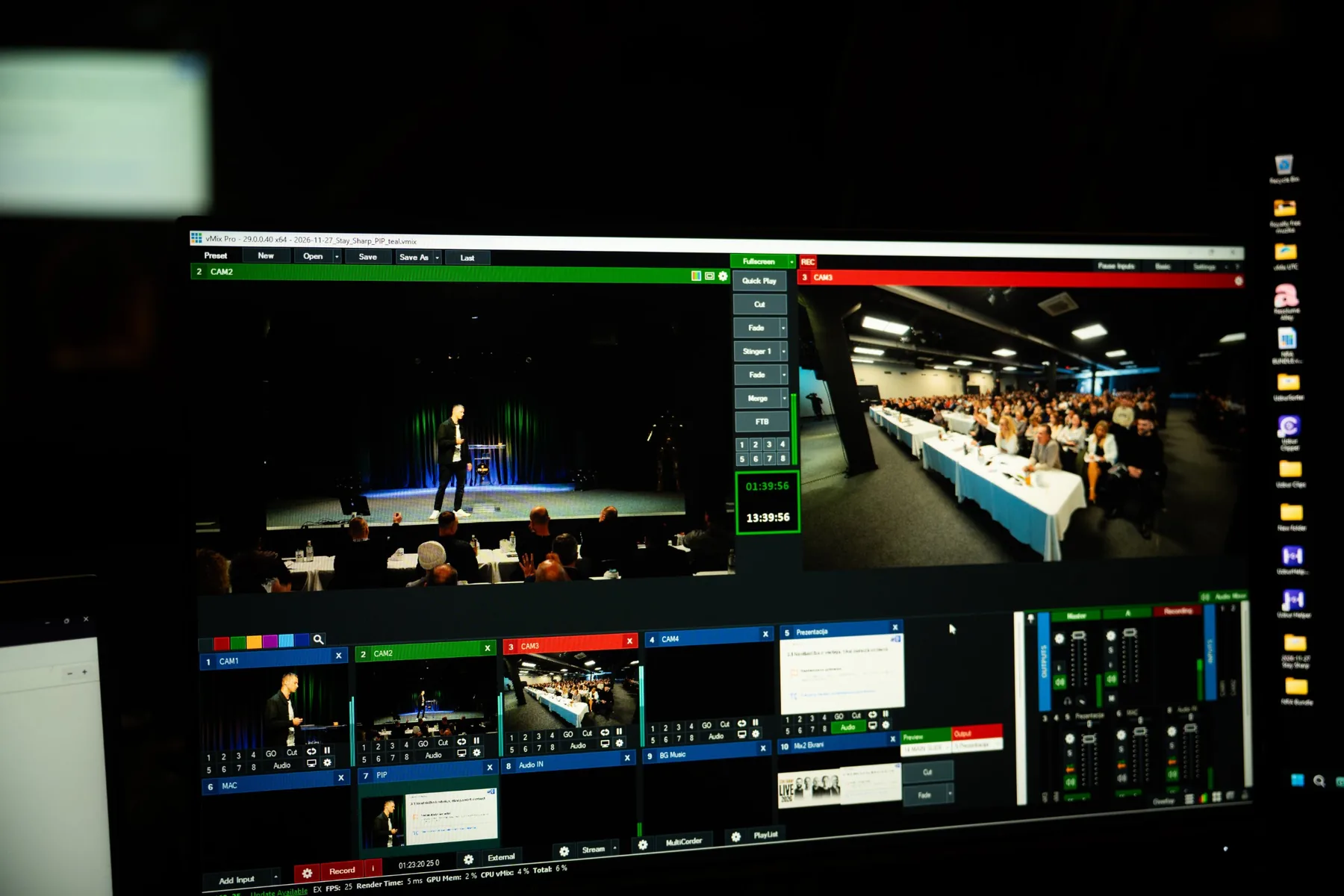
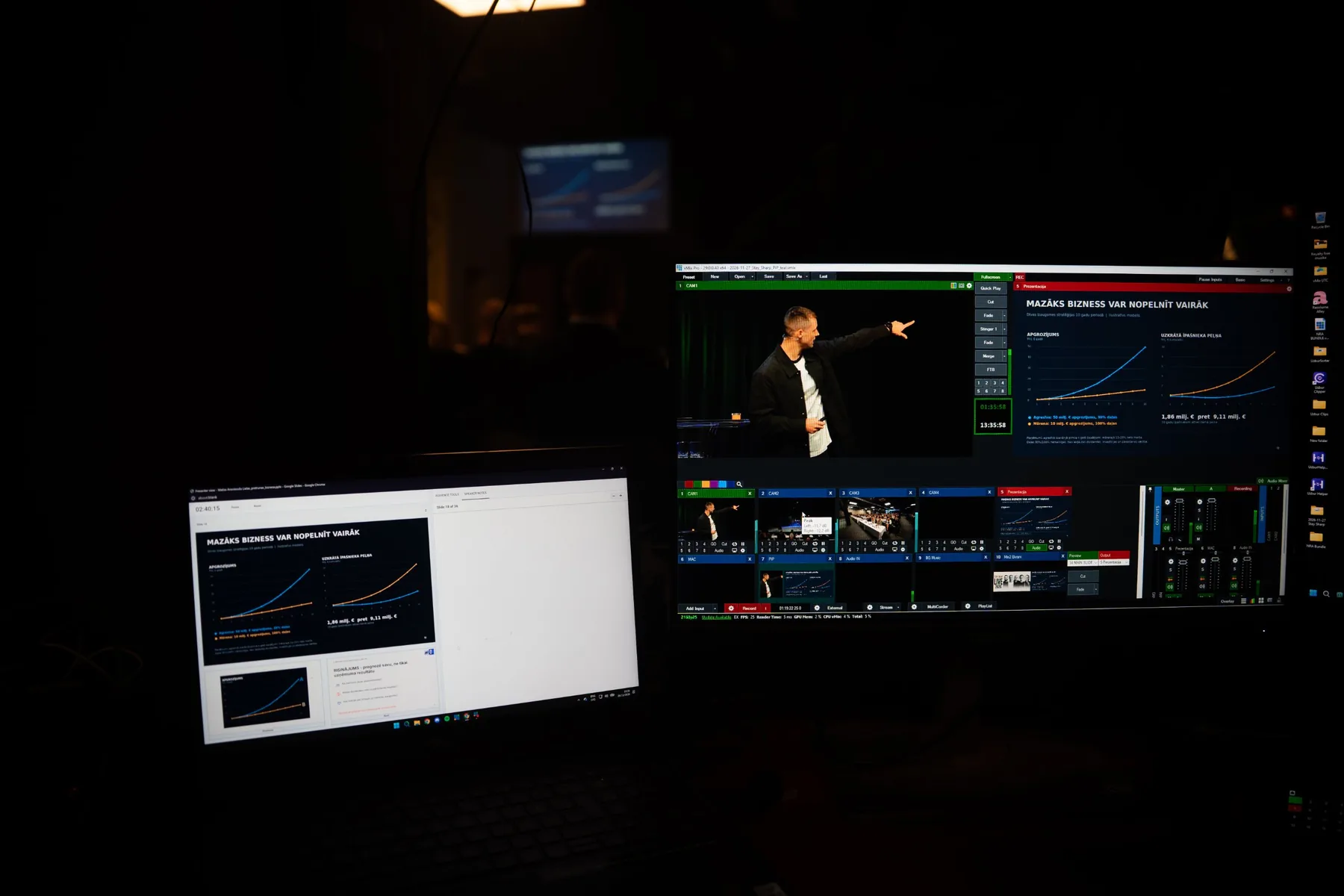
To display the concert in real-time on large screens, suitable video technology and a signal transmission system are required. Usually, the concert is filmed with several cameras, whose frames are sent directly to the video control system.
Then the director selects which camera frames are displayed on the screens at specific moments. For example, at one moment, the entire stage can be displayed, but in the next – a close-up of the artist.
After that, the image selected by the director appears on the large screens of the event.
Such video support is often referred to as IMAG (Image Magnification), and its main goal is to help viewers better see what is happening on stage.
Unlike internet streaming, this type of solution is mainly intended for viewers at the event venue itself.
4. Why is proper screen placement and video delay important?
However, installing a large screen alone is not enough. It is also important to choose the best location for these screens and at the same time provide them with a quality video signal.
If the screen is placed in a poor position, there is a high likelihood that some viewers will only see part of the screen or will not see what is happening on it at all, thus missing important moments.
That's why it's always worth evaluating the stage layout, audience areas and potential visibility obstacles before the event.
Another thing to consider is video delay.
If video frames or images lag behind what's happening on stage, viewers may notice that the artist's movements on the screen do not match what they see or hear live.
Therefore, it is essential to use the most suitable video signal transmission solution and to test the operation of all systems several times before the event.
5. Are large screens only necessary for large concerts?
Usually, when we think of using screens at events, they are associated with large concerts and festivals, but they can also be useful at smaller events.
For example, large screens could be useful at award ceremonies, showing the winners' emotions, and at various shows, showing key actions and participants' reactions.
Screens can also be useful at events with complex stage layouts where not all viewers have equally good visibility.
However, this solution is not necessary for every event. It is highly dependent on the size of the event, the location, the audience layout and the organiser's budget.
Therefore, it is essential to evaluate whether large screens will actually improve the viewer experience before making a decision.
Real-time video on large screens with Uzbur Productions
Uzbur Productions offers concert and show filming, as well as real-time video signal provision for large screens.
Our company carefully selects an individual technical solution, taking into account the format of the event, the location and the needs of the organiser.
If you are planning to organise a concert or show at some point, large screens can be one of the solutions that will help improve the viewer experience throughout the event.